
From frame to space
Each frame is first parsed into spatial structure: depth, occlusion, and where people and objects are. When the camera moves, occluded regions are inferred again by the model.
DAWA's real-time world model. It understands a real space from a single camera, rewrites objects, materials and events on instruction, and leaves the rest of the frame untouched. Runs in real time on one NVIDIA RTX GPU.
Click the chair, curtain, pot or floor in the scene
This 3D scene is reconstructed from recording frames and depth estimation to illustrate local updates. The recording below shows the model's actual output.
One office, eight consecutive rewrites in 63 seconds. Click a thumbnail or type an instruction to jump to that moment.
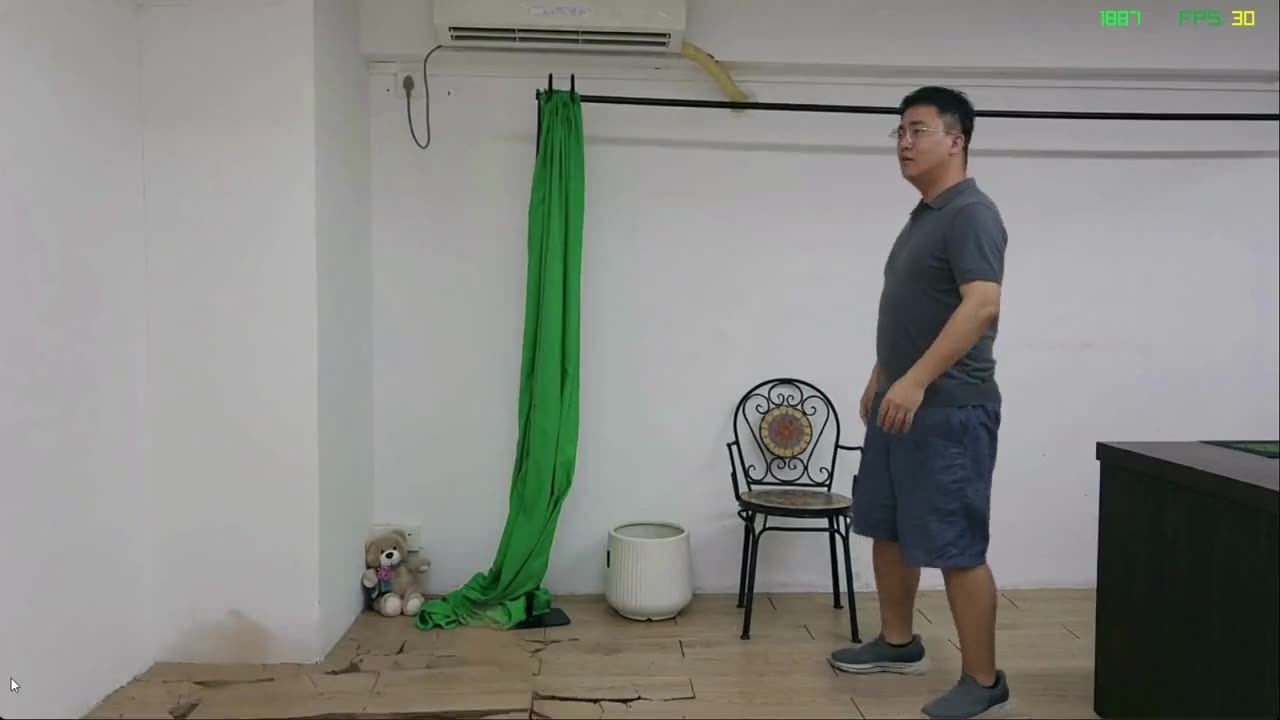
No rewrites yet
A second recording, 193 seconds.
All clips are taken from the same recording. The Chinese subtitles are part of the original recording.
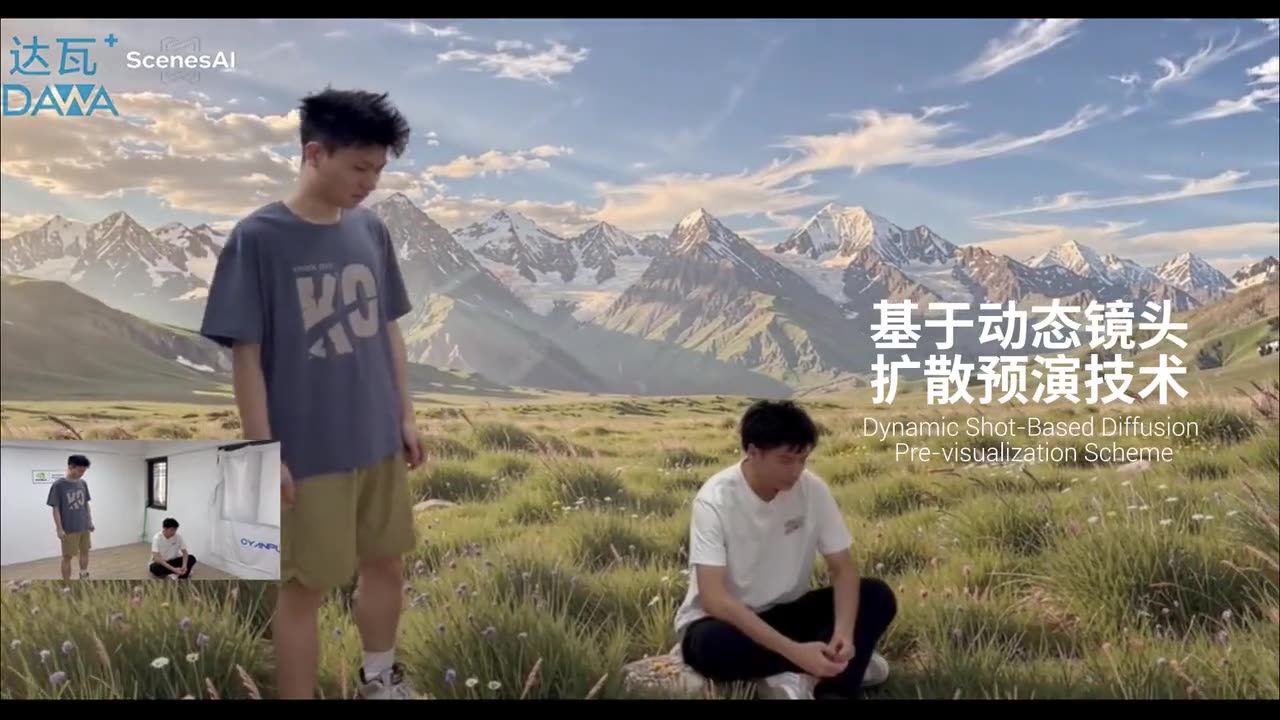
Actors perform in a white studio while the frame is rebuilt live as an alpine meadow and a beach. Motion and camera come from the real shoot.
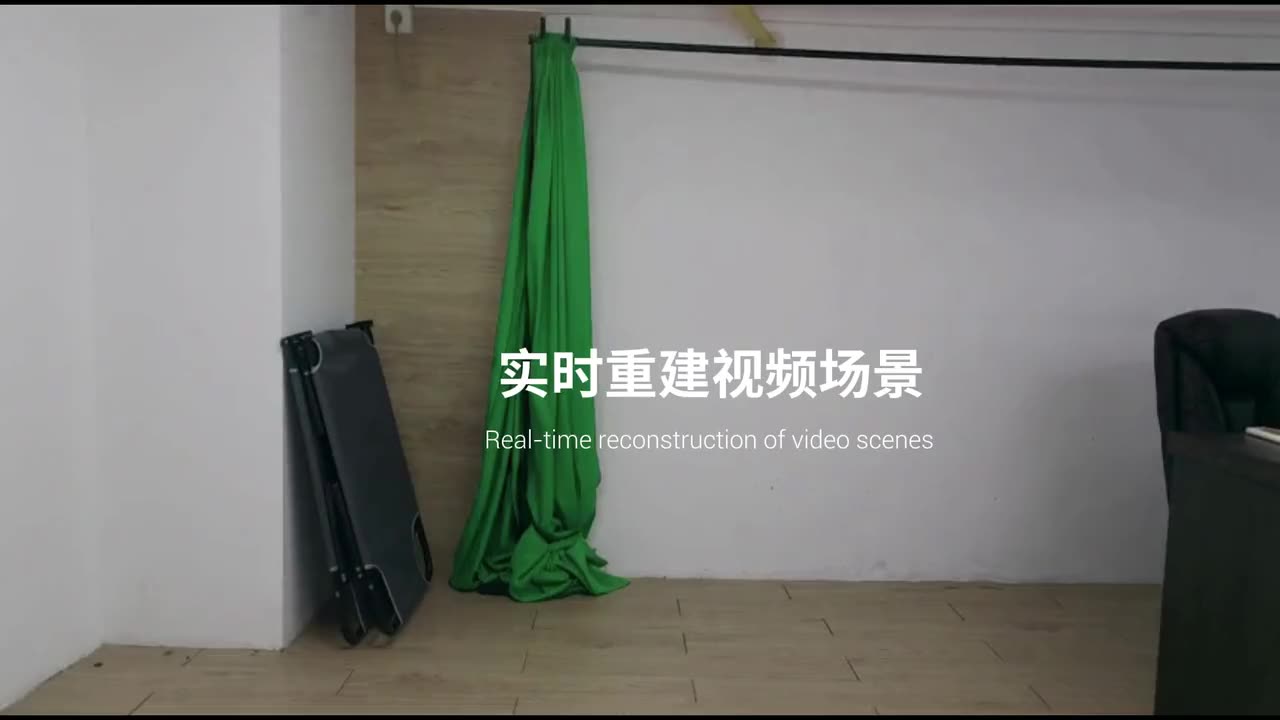
The walls are rebuilt in wood, the curtain burns from the bottom up, petals cover the floor and a cherry tree grows, with everything else left in place.
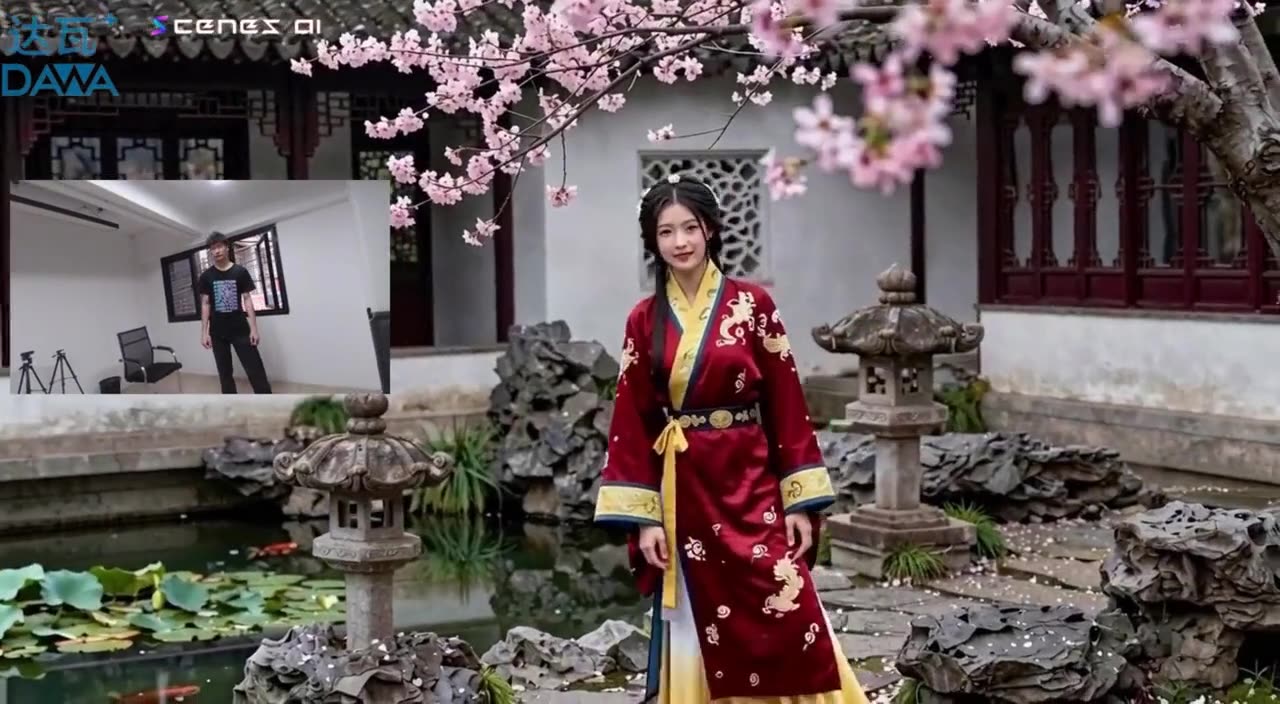
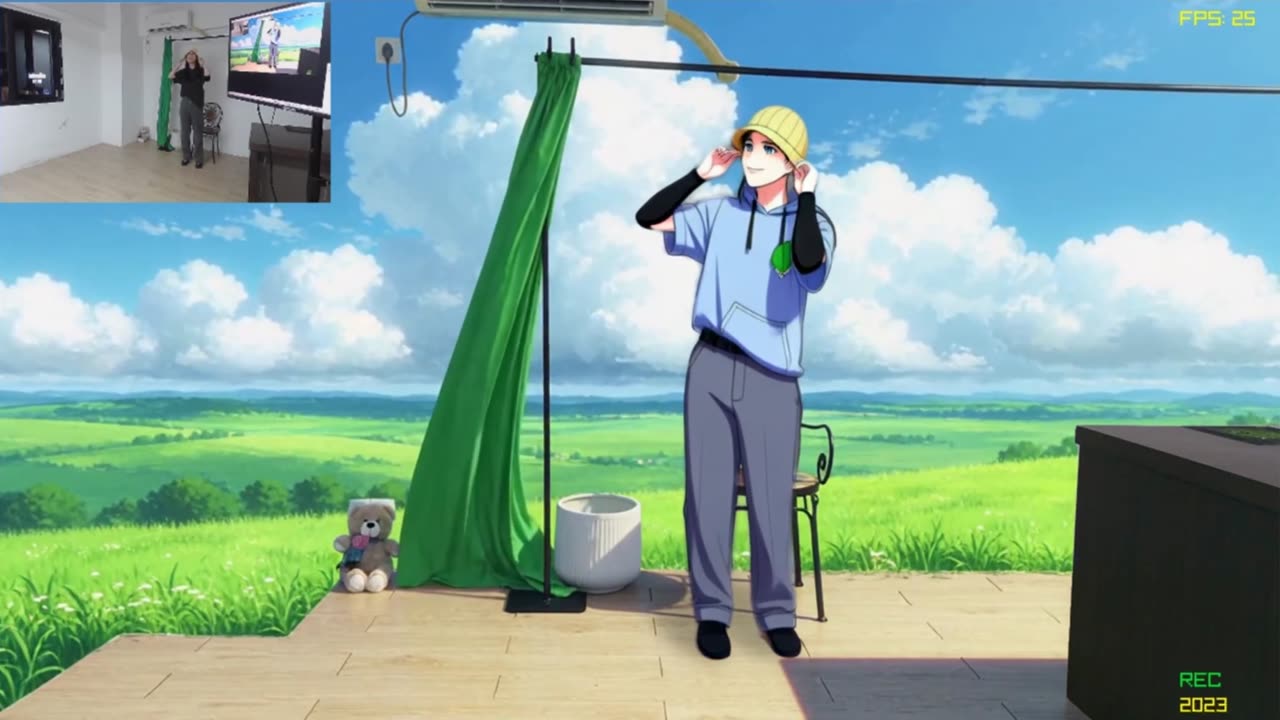
A host performs in an ordinary office; the character, costume and garden are generated and streamed directly through NVIDIA NVENC.
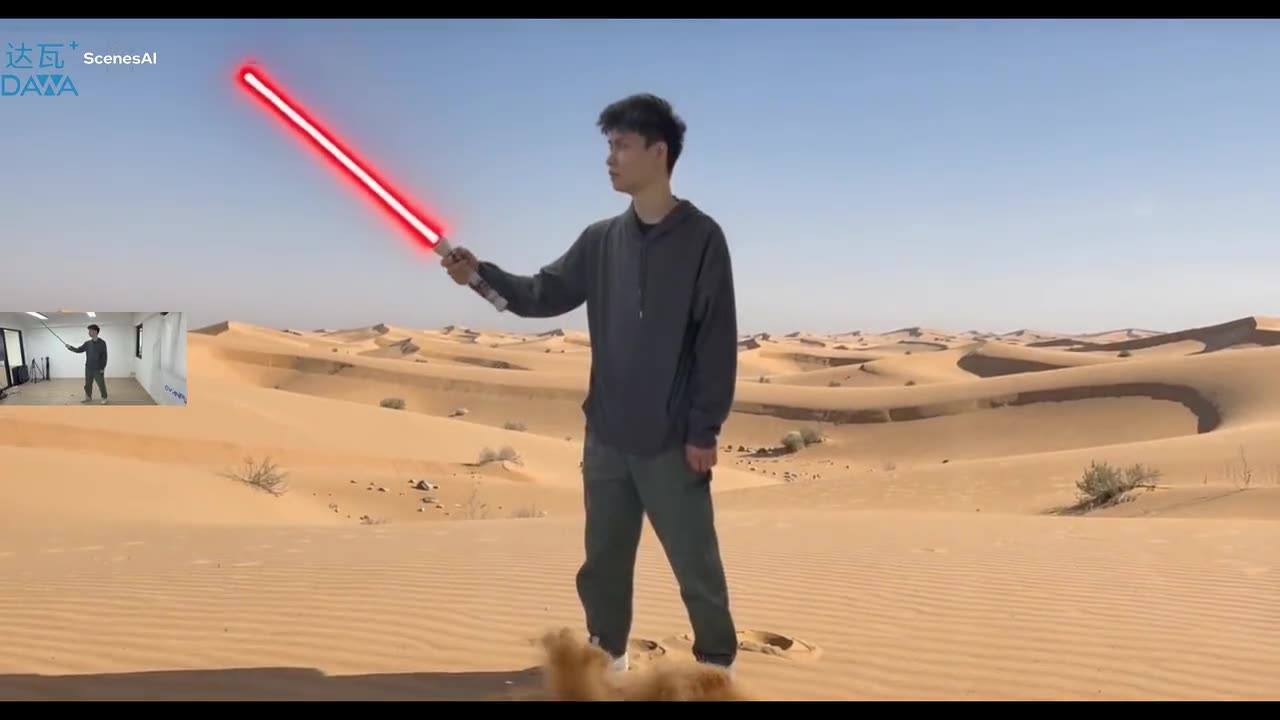
A lightsaber is generated in the actor's hand and follows the swing. Only that part of the frame is diffused; the desert and the actor stay unchanged.
Video generation repaints the whole frame every time, including walls and floors that never change. ScenesAI splits the scene into world state that updates independently, and hands only the changing regions to the generation model.
Drag the dividerThe right-hand value is computed live from pixel differences between consecutive frames of this recording.
10–20%
Of each frame changes in typical scenes
40–60%
Less GPU
3–5×
Faster inference
Compared with conventional video diffusion
How one contact event is handled: a person touches the curtain
World state
Space, people, camera, lighting, materials and physics are separate variables that can be queried and edited independently.
Latent Stage
World building and precise control
Live Stage
Real-time local generation
Underneath, neural physics and neural rendering constrain motion, collision, gravity and material response, and firelight and shadows act on the environment. The system is built on CUDA, TensorRT and NVENC.
“We shoot real films and short dramas every day. Every lighting setup and every camera move tells the model how the world works. The next race in world models belongs to the teams that own real-world process.”
Internet video keeps only the final picture. Set data also records camera motion, blocking, object contact and every adjustment the director makes, which is exactly where real-time generation tends to fail.
180TB
Structured world-state data
300+
Commercial productions
300+
Annotation dimensions per scene
84,000m²
Fully digital studio in Yongchuan
For film studios, live-streaming teams and interactive-content developers. Tell us about your scene by email and we will arrange a demo and evaluation.